
Bonus Sermon: “Watch out!”
Given that today’s gospel reading from Matthew, Matthew 18:15-20 (if your brother or sister sins against you), is such a difficult and challenging passage, and yet raises the very real and reoccurring issue of how churches deal with interpersonal conflict. It would be great, and lovely, if everything was sweetness and light and there were no conflicts or hurt feelings or personality clashes, but that simply isn’t the case with any churches that I know. Henceforth, in today’s sermon, I have tried to deal with this by outlining our Lord’s suggestions as to how we might handle it. Hope it is helpless.


“Response-ability”
Calamities, disappointments and less than positive behaviours and remarks are ‘bound’ to come our way--it cannot be helped, as they are probably part of life. It is how we cope with them or deal with them that really counts, really makes a difference to our lives--and the lives of others. That is the kind of thing that today’s meditation touches on. I hope you find it helpful and inspiring.

“Surely the most appropriate warning”
Today’s passage and meditation are particularly appropriate for anyone who speaks professionally as part of his or her work, but then, is it not also appropriate for each and every one of us, for, no matter who we are, our words have an impact--for better or for worse. So, we need to be careful and very deliberate in what we say and how we say it.

“An archetypical straw man”
Today’s Scripture reading and meditation touch on what has been one of the major, and most controversial, debates within Christendom, the debate between works and faith. It is a debate where neither extreme is viable at all. To say that ‘works’, that is, our deeds are totally sufficient in themselves nullifies the entire idea of grace, of God’s independent favour, which is bestowed upon us whether deserving or not. That is one of the principle tenants of the Christian faith. And, on the other hand, if we say that faith in the form of a mental conviction or belief is sufficient, then we rule out the reality that faith is actually a trust or a reliance upon something or someone. The truth then, in this debate, is that we need both, both faith and works, in some sort of balance. So, there’s the rub. We humans aren’t particularly good at balances. And, so we need each other, and God, in our attempts to achieve it.

“A totally corrupting habit”
One of the useful exercises we did at my previous church was to enter the church building without any expectations or previous knowledge of that church or any church, and to help us in this, we had something of a guide. The results were most interesting and informative. For instance, we did not realize that the church had five doors but only one customarily used for Sunday worship--but who else knew that? As for the washrooms, cloak room, Sunday school rooms or nursery, there was nothing by way of directional signs. And where do we go for coffee: again, no sign. And as for knowing instinctively where to sit or when to stand, sit or kneel, or how to find where we were in the various books: fortunately, our celebrants had gotten into the habit of telling people--and giving them sufficient time to do so. Anyway, we discovered that there were a multitude of ways that we discriminated or showed favouritism--albeit almost always unknowingly and unintentionally. Anyway, it is important to think about such things. After all, our Saviour loves all people, died for all people, and wants all people to be part of His loving family, the Church. And so, it is important and essential that we do our parts.

“A decisive encounter”
One of our enemy’s most frequent and pervasive lies is two fold, firstly, that we don’t matter as individuals and secondly, that as individuals there is little or nothing that we can do to make a positive impact on our world. Actually, the truth is exactly the opposite: we do matter and we can make a difference, a difference no matter who or what we are.
This negative thinking of one’s self also extended to one of the great heroes of the Bible, Moses by name. He felt that he simply wasn’t the person, either to confront Pharaoh, nor to lead God’s people out of their slavery. And, he certainly didn’t feel that he had the gifts or abilities that were necessary.
But, with God, that wasn’t a problem. He provided the resources necessary, and used Moses, used him mightily for His purposes. So, perhaps, this is a message for each of us. Don’t excuse yourself as under-equipped and don’t write yourself off. God can use you.

“Our always faithful one”
Probably all of us have, at some time or another, felt helpless and even hopeless, though I certainly hope that few of us ever felt quite so helpless and despairing and faced with death as did our psalmist for today. But, whatever our state, we have a God who is with us, who understands, who cares and who can help us--if only we will turn to Him, pray to Him and trust Him to help us. That is the good news of every, and any, situation in which we find ourselves. Thanks be to God.

“The best of intentions”
I am so glad that we have Saint Peter in the Scriptures, for I find that I can readily identify with this ol’ foot in the mouth, impetuous, hot and cold, unpredictable fellow. He fumbles in his discipleship and gets things wrong, but then, so can we all. And still God restores him and forgives them and uses him, albeit gloriously, in His work. And can God, with each of us. Thanks be to God.

“Invested with new meaning”
The Passover Seder has long been a treasured remembrance--and re-enactment--of some of Israel’s most storied past, and then Jesus invests it with all sorts of new meanings and significance, especially for us who are among His followers. As the first Passover hinted at the deliverance that was to come, so too does our ‘new’ Passover, the Last Supper. And so, each time that we celebrate it, we remember what Christ has done for us--and we take part in it--and become part of it-- in a wonderfully tactile way, in the Bread and the Wine of the Eucharist. This is part of what we read about and remember in today’s passage and meditation.



“What a contrast!”
It is entirely fitting that the book of the Bible that we know as the Psalms begins with the passage chosen for today, Psalm 1. That psalm lays out what it is like to follow God and His ways--or not to do so, and then spells out, in rather graphic and unforgettable fashion, what the consequences of those choices will be. They are some good things to keep in mind.

“Some unsung heroes”
Far too often we get the notion that we are unimportant in the entire scheme of things and that we do or so makes little or no difference. But, if the truth be told, each of us does make a difference. As the old stories of one missing horseshoe nail having such an impact or of the addition of one single snowflake or raindrop determining whether there’d be a snow slide or a flood, reveal, the addition or loss of just one ’thing’ can have an amazing impact. And so it is with each of us, and our impacts on the world. Keep up the good work, whether you think that it matters, or not.

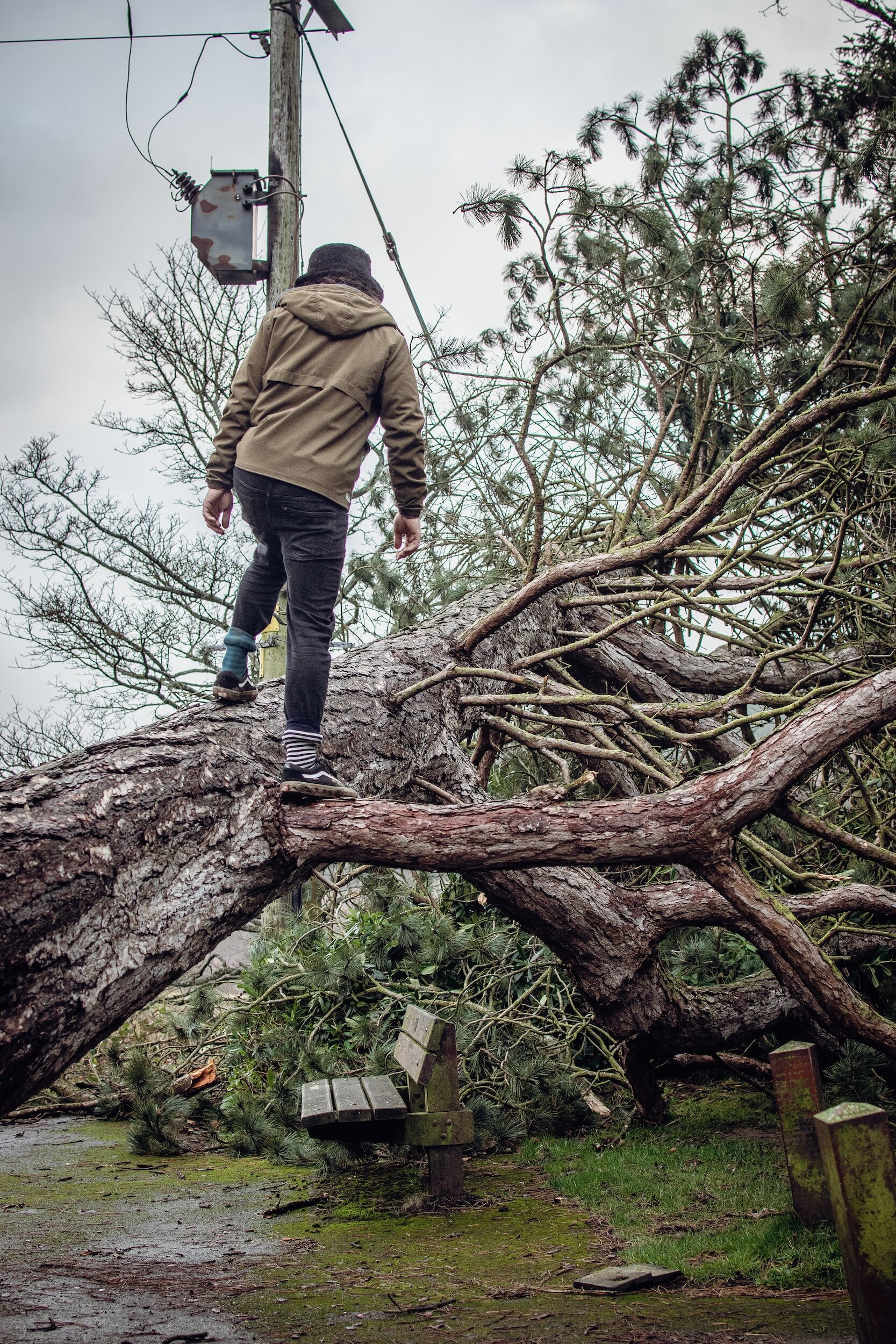
“Troubles a-brewing”
As I read today’s Scripture passage, meditated on it, and prepared to send it out to you, I could not help thinking of what King George VI said in his Christmas message in December 1939. He quoted a poem by Minnie Louise Haskins, a poem often called “The Gate of the Year”, even though that was not its original title. His quote read as follows:
"Go out into the darkness and put your hand into the Hand of God.
That shall be to you better than light and safer than a known way".
Given that darkness had indeed fallen in the form of World War II and there seemed to be no quick or easy way out, and no prospect that any human endeavour would change anything, his words seemed very appropriate.
I would likewise suggest that they are very appropriate for today, for, while we do not see a world entrenched in a world war, we do have a world and a society that is wracked by tensions and troubles galore--such that humanly speaking, we seem to be without any recourse or answer. Here, then, it is good to take a page from today’s reading and meditation, namely, to remember that God knows and is in charge; that He will work things out, and that He holds us firmly and dear in the palm of His hand. And so, the poem’s advice that we reach out our hand to hold His is very, very appropriate.

“Countering the downward spiral of evil”
Sometimes indeed things seem to get out of hand and get worse and worse over time. That can apply to the state of our health or our personal lives, the state of local or national politics or world affairs, and even to evil and wrongdoing in general. The good news is that God is there, God understands and sympathizes with us, and is able to help us through these things--if only we will let Him. That, I think, is the message of today’s psalm and meditation. I hope you enjoy them and find them helpful.

“How NOT to be humble”
I guess that it’s only natural, and rather human, to want to do well and be proud of one’s doings, but there is, quite obviously, a limit to that. It is so easy to lapse into boasting and self-absorption. The antidote to this is, in Jesus’ words, simply to concentrate on helping and serving others, and to not be concerned at all with oneself and one’s actions and how they are perceived. A focus on God and on other people has a way of crowding out having one’s attention centred only on oneself.

“Severely ‘torn’ by the circumstances”
Today’s story from Scripture is one of the saddest episodes we will ever encounter. Here we have a grieving parent, heart broken over the loss of his greatly loved son. But what made it all the more difficult is the fact that he could have done something to prevent the death--on numerous occasions--but did nothing. It reminds me of all the times that we avoid taking action or put it off because we are torn by the options or consequences or because it is difficult. What is says to me then is how vital and important it is to take that action at the first and opportune time.